THE BASICS: WHERE – FACTOR 5: Cost
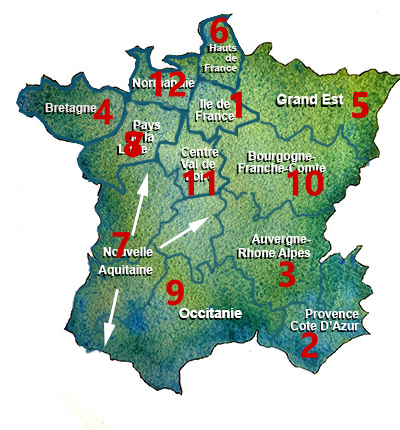
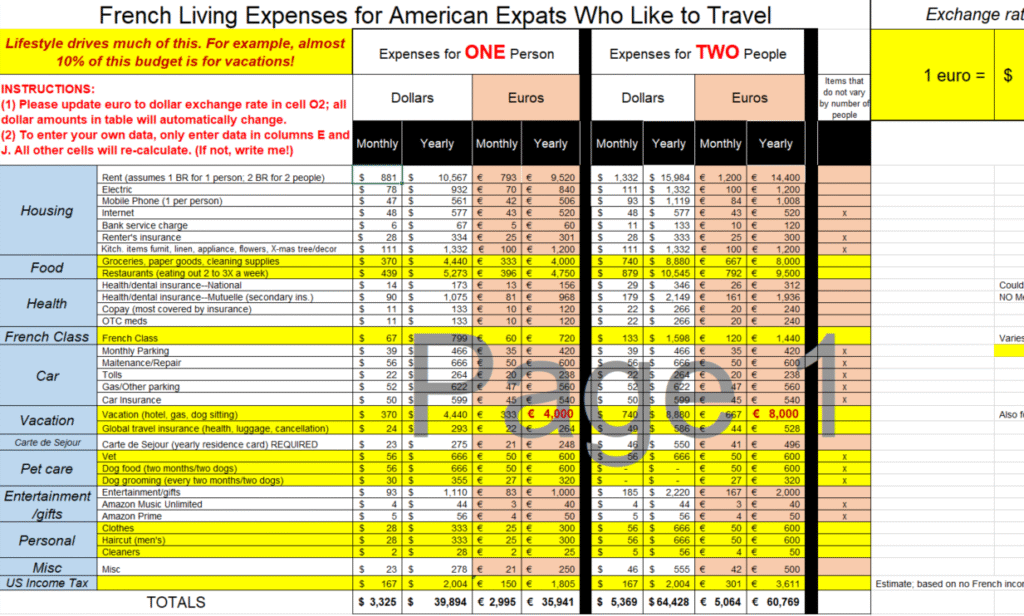
 In order for a foreigner to retire in France, they need a visa. Most visas available will have a minimum income requirement. If you’ve come to France, you are very likely to have more than €1800 a month to live on. This figure is based on the minimum wage in France (SMIC) and does change over time. In the assessment stage, we will assume that your need to economize will not require you to live on less than what a long-term stay visa requires. Indeed, we would advise you not to try to move to France with an income lower than the one required for your visa. Given that baseline of €1800 a month , here are the most and least costly departments to live in France.(1 = most expensive, 12 = least expensive). Across the board, fuel in Europe will be more than in the US and Canada, and public transportation will be less costly in France than in the US.