THE BASICS: WHERE – FACTOR 4: Welcoming Atmosphere
 You’ve heard the stereotypes. “The French are rude.” “Why don’t they smile more?” etc., etc. Are they true? Should your search for where be an attempt to find the friendliest place in France?
There are so many layers to this question! One of the primary goals of this entire course is, in effect, to answer this question. But while we are still in the assessment phase, and, in particular, in the “where in France?” part, we would like to focus on two things because they are likely to influence the results of the “where?” answers.
- The differences between regions, in general, with respect to their reception and integration of newcomers:
- The sunny South will be more relaxed and welcoming to newcomers than the north.
- Paris in particular is more reserved. It is further north, it is urban, and tourists are everywhere; all three of these factors will increase the reserve a newcomer might encounter.
- In the north, both the Pays de la Loire and Brittany have a reputation for greater than average friendliness. Bretons may initially be reserved, but upon closer acquaintance can be fantastically warm.
- Areas closer to Switzerland and Germany will show those countries’ influence, which is generally more formal and can seem more reserved – though nearly universally polite.
- Tourist areas can often seem initially quite welcoming, but that friendliness is often superficial. Having so many tourists, these cultures can retain a firm reserve beyond the initial interchanges. If an area is overrun with tourism (Côte d’Azur, Paris. Provence) expect some reserve, even indifference and exasperation, from the natives.
- Rural and urban settings, no matter where they are in the world, can make a difference in the welcoming vibe. Quite rural areas, unused to newcomers, may be reserved or suspicious of a newcomer. Urban areas may also have a layer of unfriendliness because of the crowded and rushed nature of a city. (This is no more or less true in France than anywhere else)
- Language: if you are still at a beginner stage in the French language, there are areas of France that will have more or less proficiency in English among the French.
- The Paris region, Pays de la Loire and Brittany score the highest of the French regions.
- Burgundy (Bourgogne-Franche-Comté) and Normandy scored the lowest (but that figure may be deceptive as Normandy has many residents who’ve come from Britain to settle there, so English will be more common. )
- Dordogne (sometimes called “Dordogneshire”) has the highest concentration of Brits in France. This means that, in general, you’ll find either native English speakers or French who are quite used to dealing with English-speaker. Nice and Bordeaux have long-standing British émigré populations as well.
- A French cultural value across regions: quality, propriety and courtesy are likely to take precedence over efficiency. This is an aspect of the French culture that may seem unwelcoming but isn’t exactly that. For example, when you don’t receive an instant answer (from an agent, a government official or a commercial service)it may not be rudeness or lack of concern. In general, much of business is still done in person. Face-to-face communication flows better than a phone call, and either will work better than emails. Somewhat in contradiction, a text (usually via Whatsapp) may actually work quite quickly. However, do NOT expect any French professional to answer a question, in any form, put to them outside working hours. That violates the courtesy of respecting their private time. They won’t answer, and they’ll resent the intrusion.
- Other factors that may aid in ‘belonging’ to a particular location in France:
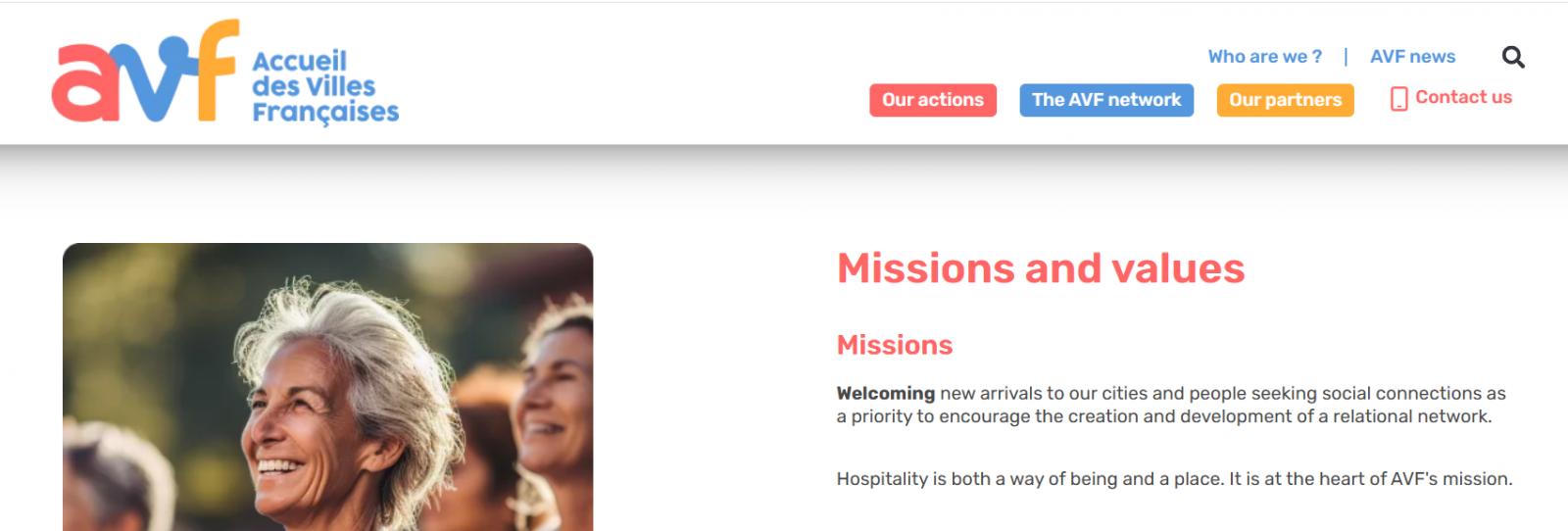

- There is an organization called “Acceuil Villes Francais” (AVF that exists in over 250 towns in France that offers a variety of programs for integrating newcomers to those towns. While most of those who join are French, many English-speaking newcomers find this an excellent way to begin to get to know other people in town. Because AVF is for newcomers, one often finds that the members are more open and willing to make new friends than other longer-standing residents. They’re new, too; they can use friends as well. Most of the activities are conducted in French, but since many of them — hiking, bridge, painting, boule — can be enjoyed without being fully fluent, they provide a great way to find friends who share your interests, while also improving your French. There are other similar non-profit agencies that offer very similar opportunities at lower costs, including Universite du Temps Libre and Generations Mouvement.
- Many cities and towns in France offer a robust offering of associations with activities for all residents (eg; fitness classes, cinema, dance lessons, reading and walking groups, and cultural outings) that promote health and social ties. There is probably no more robust tool for getting to know the locals than joining one of these associations. Lists of the many clubs are available via the mairie or tourist office.