
THE BASIC WHERE FACTORS 1: Climate in France
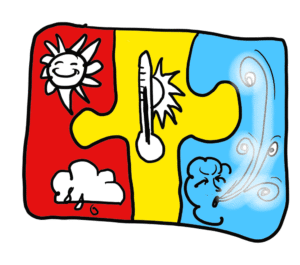 For many people, the climate is often the most important of all the factors in choosing where they want to be in France. And it is a complex one. Of the many climate factors, we’ve chosen these three and find it helpful to think of each of them on a spectrum
- Temperature (Hot to Cold)
- Sunny to Cloudy to Rainy
- Windy to Calm
Of course, these three factors overlap a bit. A sunnier climate is likely to be warmer. Wind can definitely affect the temperature. But considering France’s climate, these are the factors that seem to matter most for people choosing their preferred location. Other factors, like snow or humidity, exist but to a less crucial extent.
 We find that many people, however, every day do have an extreme inclination for or against heat, or, alternately, cold. People are rarely neutral about this. Most find extreme heat or harsh cold to be a
  deal-breaker, so it is a factor to be considered carefully (The map shows the areas which are most intensely warm in darker reds. )
Surprisingly, all of France can be cold, but you can see on the map, the South (except for the Massif Central) is a better bet for those who hate the cold. The Côte d’Azur, the coastal region along the Mediterranean, has milder winters than the Southwest. Yes, you can have cold days, but more than other regions, the Côte d’Azur is protected from the winds by the Mistral. The influence of the Mediterranean has a more temperate effect here than the Atlantic does for points further west. While snow is not unheard of anywhere in France outside of the mountain areas (Central Massif, Jura, and Alps), it is not likely to last. Except for in the most northern parts of France, even frosts are not every day in the winter.
 The North can be gray. People who prefer four seasons often love central France.
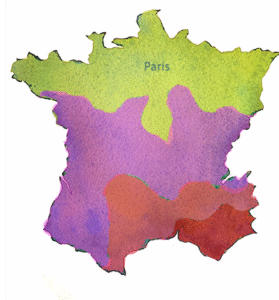 As the map on the left indicates, the northern part of France (yellow-green) is not known for its sunny climate. Resolutely gray days, even stretches of them, are not unknown. Coastal areas of the North, while cloudy, are also quite changeable, so while the forecast may say it will be a cloudy day, it may also be sunny and rainy that day. If you are strongly affected by a seasonal change in mood, you will probably need to factor that into account before choosing the non-coastal areas of the North.
As we’ve said, often, the population of people choosing a climate in France divides itself into two groups: the “I don’t do winter!” crew and the “I need four seasons” folks. Much of the central part of France (included in the purple area of the maps) fits the bill for a “four-season climate”. Moreover, while there is winter, in much of France the winters aren’t particularly harsh, with snow being a rarity and frosts not common. This is quite true of the regions in purple on the map; winters, yes…but not particularly hard and not unrelentingly gray.
 Wind is a greater factor in France than in many other places but it’s one that a newcomer might not think is necessary to consider. Two winds in particular are legendary; the Mistral and Tramontane are strong, cold, and dry winds in France, shaped by mountains and pressure systems, bringing clear skies.
- Mistral: Northwesterly, down the Rhône Valley.
- Tramontane: Northerly/northwesterly, from the Pyrenees/Massif Central or Alps.
They are comparable to the Chinook and Santa Ana winds in North America. But many climates that are considered windy have winds that are less intense than the Mistral and Tramontane. The Mistral and Tramontane are very dry, very channeled, and can blow for days, even weeks, without stopping. Because many people have not had experience with this type of wind, it’s a tricky and important part of choosing where in France you want to be. If you choose an area that is likely to be affected by these winds (See map with the darker reds indicating more intense winds.)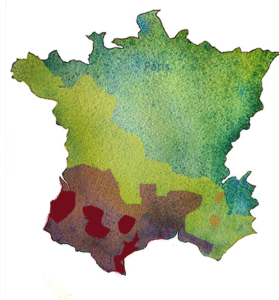 and you’ve not lived in thatarea, we strongly advise going and experiencing that wind in person. Folk wisdom about these winds might convince you. The Mistral has been called The “Mad Wind” (Le vent qui rend fou). Its relentless howling and pressure are said to cause headaches, irritability, sleeplessness, and even erratic behavior (ie “madness”). Both winds are deeply ingrained in the local culture and landscape. Not all people seem to be affected by these winds. One American after a stay in Provence said, of the Mistral, “It’s like having a leaf blower outside your window 24 hours a day.” and another who lives in an equally Mistral-prone area said, “I didn’t even notice till it blew my wig off one day. “