THE BASICS: Misery — a predictable part of moving to another country
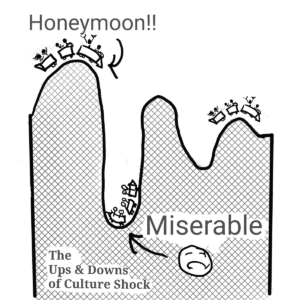
It would be irresponsible for a course on this topic not to warn participants about culture shock. There are ups and downs. It can be something that hits suddenly and, if you don’t expect it, can be debilitating. Expect that, at some point in your journey to move to France, after you’ve been there (either on a scouting trip, or further along) you will be overwhelmed with frustration, regret — even fury. Do not panic. Totally normal. The downsides (sometimes called ‘hitting the wall’) are real, but they are also usually a ‘wave’, not a permanent condition. They get easier, but perhaps will never go away. Welcome to the terrain of the immigrant.
It is widely accepted that most people go through an emotional and psychological adjustment process when they move to a new culture. One of the first to identify this process was Sverre Lysegaard in 1955, based on his research with international students in the United States. He called it the U-Curve, first proposed by Sverre Lysgaard in 1955. His theory postulated four phases.
Honeymoon (initial excitement and admiration)
Culture Shock (overwhelm, homesick, annoyance)
Adjustment (coping, adjustment, new routines)
Mastery ( a sense of belonging develops)
This theory has been widely confirmed and expanded. It is now generally accepted that rather than a U-curve, the experience of moving to another country is likely to be one long wiggle, where frustration and belonging alternate in one’s emotional experience. It is also generally accepted that developing a true sense of mastery in an adopted culture takes decades, if ever. If one is moving to France as a mature adult, this can mean that the fluctuation level of frustration and satisfaction with the move may be with you forever. The ups and downs are likely to be less steep as time passes, but the immigrant experience will always brings highs and lows.
Hi! We noticed you’re not registered with our site yet. Please register using the form below; it just takes a minute. If you’ve registered already, please login here (so you don’t see this popup anymore)